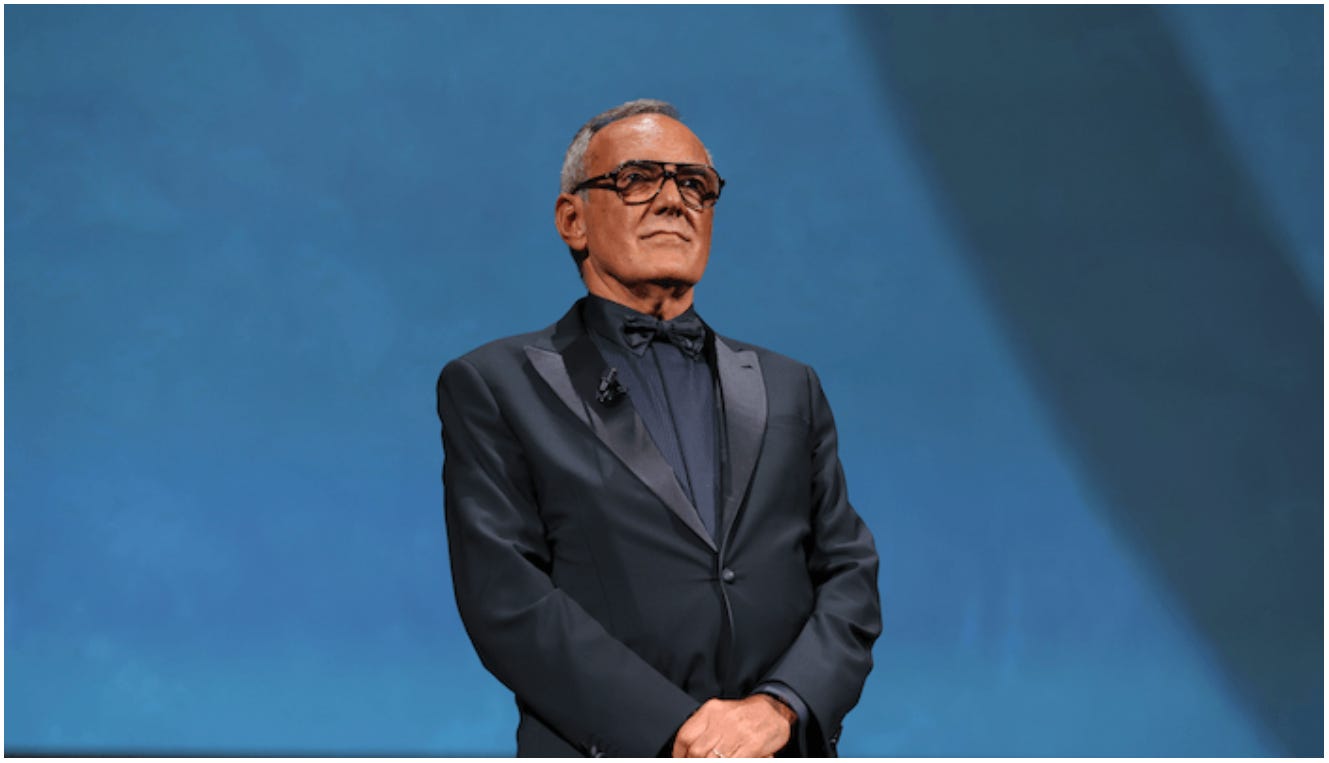
Alberto Barbera on the 2025 Venice Film Festival: “We’ve Assembled a Major Line-Up”
With the 82nd Venice Film Festival just around the corner, Artistic Director Alberto Barbera shares his thoughts on this year’s official selection, the absence of Latin American titles, rising censorship in China, and why Paolo Sorrentino and Cédric Jimenez are set to bookend the festival with two of the year’s most anticipated films.
“We had to make tough choices”
Asked how he would characterize this year’s edition, Barbera didn’t hesitate:
“The most anticipated films of the fall will premiere in Venice. We’ve put together a major line-up, though as always, we had to make difficult choices—there simply wasn’t space for everyone. I hope we made the right calls. We’ll see how the press and public respond in September.”
Barbera explains that the main competition focuses primarily on established filmmakers, while other sections like Horizons are designed to highlight new voices.
“We’re showcasing directors who have made very few films and aren’t yet well-known internationally.”
Funding gaps in Latin America, censorship in China
Barbera points to an imbalance in geographic representation this year, with American and European productions dominating.
“We only have two Chinese films and very few from Latin America,” he says, attributing the latter to severe funding shortages in countries like Brazil and Argentina.
“It’s hard to make films when there’s no public support. But I believe Argentine filmmakers will continue creating strong, relevant cinema in spite of it.”
As for China, Barbera notes an increasingly narrow cultural agenda:
“Censorship is strict. The government only backs films that align with its political vision.”
One exception: Shu Qi’s debut feature Girl, which will screen in competition. The film, set in the 1980s and '90s, explores the condition of women during a transformative period in Taiwan’s history.
“It’s bold, beautiful, and an important artistic statement,” says Barbera.
Sorrentino opens, Jimenez closes
The 2025 Mostra will open with La Grazia, the latest film from Paolo Sorrentino, in a return to more restrained storytelling.
“This film is closer to The Consequences of Love than Parthenope,” Barbera notes. “It’s stripped-down, emotionally resonant, and marks a major moment in Sorrentino’s body of work. I’m thrilled he chose to return to Venice, given that he’s usually a Cannes regular.”
The festival will close with Cédric Jimenez’s Chien 51, a highly anticipated sci-fi thriller.
“It’s politically charged and visually spectacular,” Barbera says. “Jimenez brings incredible energy and talent. With its gripping pace and star-studded cast, it will make for a fantastic finale.”
“No interference” in Italy—for now
While discussing the political climate in global filmmaking, Barbera also addressed recent changes to Italian film tax credit policies under the new government.
“It caused some turbulence in the industry, but things are slowly stabilizing,” he says. “So far, we haven’t faced direct political interference—either in production or in our festival programming.”
Still, Barbera is keeping an eye on international trends. “Some countries are entering more worrying territory,” he cautions. But for now, the Venice Film Festival remains a platform for creative freedom and global exchange, with a 2025 edition that aims to balance prestige and discovery.