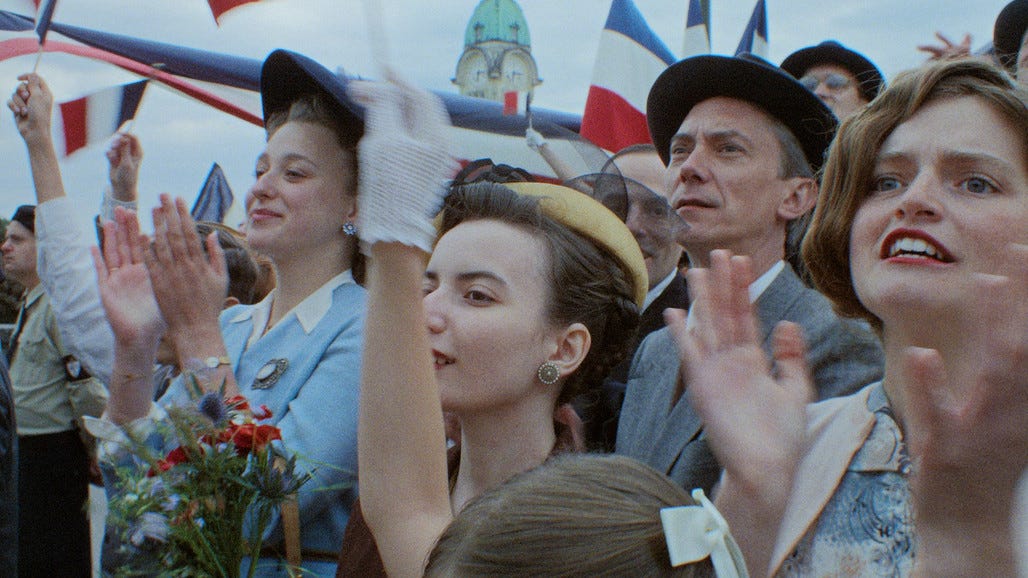
The Notre Salut Collective: Reimagining the Period Piece
One of the most anticipated entries in this year’s Official Competition is Notre salut (Our Salvation), a French-language historical drama that completely strips away the rigid, academic codes of traditional period cinema.
Emmanuel Marre (Director): Following his acclaimed Rien à foutre (Zero Fucks Given), Marre returns to Cannes with a film built from a real-world family archive. The story follows an ordinary man navigating Vichy France, played by Swann Arlaud. Marre deliberately avoided a “history teacher’s approach,” opting instead for real locations, a highly condensed crew, and an open framework that prioritizes raw performance.
Olivier Boonjing (Cinematographer): A long-time collaborator of Marre, Boonjing believes a film’s soul is forged long before the cameras roll. “I am intimately convinced that a film is made in pre-production,” he asserts. His hands-on approach to location scouting and camera testing ensures that the film’s visual texture feels immediate and direct rather than staged.
Sandrine Blancke (Actress): Blancke delivers a deeply layered performance as Paulette, a wife left behind on the home front, caught between romantic longing and harsh daily survival. Championing the “artisanal side of cinema,” Blancke thrived in Marre’s small-crew, improvisation-heavy environment, using her expansive acting background to anchor the film’s emotional weight.
The Arthouse Heavyweights & Global Exporters
“The sinew of war isn’t actually sales—it’s acquisitions.” — Pamela Leu, Head of Be For Films
Tatjana Kozar (Producer, Versus): Managing a massive Cannes slate alongside Jacques-Henri Bronckart, Kozar has positioned Versus across multiple top-tier slots. The company is backing Lukas Dhont’s Coward and Charline Bourgeois-Tacquet’s La vie d’une femme in Competition, alongside Pierre Salvadori’s La Vénus électrique and Agnès Jaoui’s L’Objet du délit. Kozar emphasizes the need to align financial partners earlier than ever to secure distribution in a tight market.
Pamela Leu (International Sales, Be For Films): Based in Brussels, Leu is leading the global sales charge for Charline Bourgeois-Tacquet’s La vie d’une femme (A Woman’s Life). Boasting a star-studded cast including Léa Drucker and Mélanie Thierry, the film has drawn massive international buyers’ interest. Leu’s philosophy focuses on extreme loyalty to her creators, tracking them from their debuts onward.
Un Certain Regard & Midnight Sensations
Mara Taquin (Actress): Taquin makes a fierce return to the screen in Marion Le Corroller’s debut feature, Sanguine, landing a coveted Midnight Screening slot. She portrays a young woman trapped in volatile familial and internal conflicts opposite Karine Viard. Taquin is also keeping an eye on alternative mediums, recently working on Notre Voix, an experimental animation short built from real-world outdoor footage.
Benoît Roland (Producer, Wrong Men): Roland brings Valentina Maurel’s Ton animal maternel to Un Certain Regard. The film tracks a 28-year-old woman returning to San José to deal with a highly unstable family unit. Roland notes that while accolades are wonderful, long-term writer relationships come first—a philosophy tested by a stagnant European financing climate that demands highly creative financial structuring.
Jennifer Ritter (Producer, Atata): Operating on a deliberately lightweight, agile production model, Ritter is on the Croisette with Yesterday the Eye Didn’t Sleep (Un Certain Regard). Shot in an isolated valley in Lebanon, this sensory debut feature follows two sisters facing ancient tribal codes. Ritter argues that strict budgetary constraints can actually foster immense formal and artistic freedom.
Animation and Real-World Chronicles
Fabrice Delville (Producer, Beside): Delville is making waves in Un Certain Regard with Le corset (The Corset), a stunning animation feature directed by Louis Clichy. Set in 1970s rural France, it follows an 11-year-old farmer’s son struggling against family expectations. Delville is also co-producing Léa Mysius’s Histoires de la nuit (In Competition) and Antonin Baudry’s La Bataille De Gaulle (Out of Competition). For Delville, co-production is simple: “A co-production is a marriage.”
Laurence Buelens (Producer, Rayuela): Representing the documentary sector at the Co-Pro Social Club (Cannes Docs), Buelens focuses on high-impact, socially conscious international co-productions, drawing from her filming experiences in Argentina and Palestine. She observes that while the market is teeming with essential stories, the global pool of documentary funding remains fiercely competitive.